Introduction: Crossing the Boundary Between the Living and the Dead
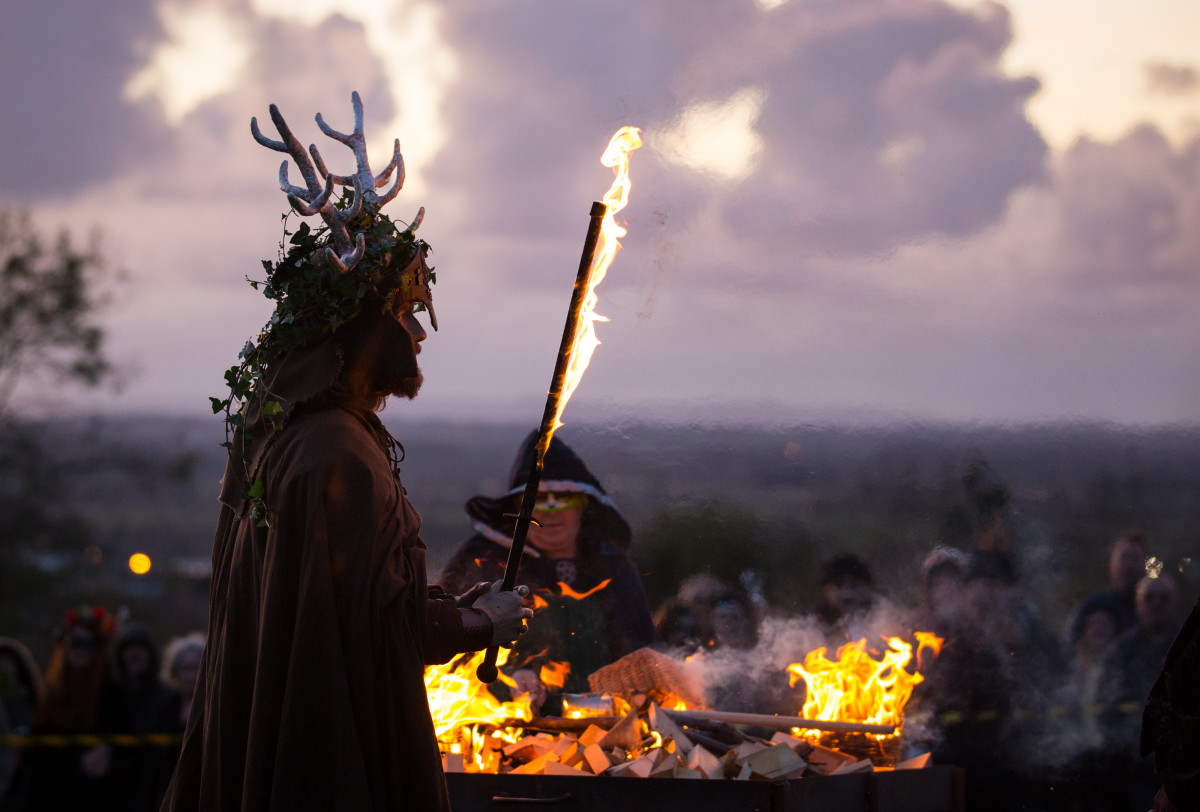
While Halloween has evolved into a global annual spectacle, known for its jack-o’-lanterns, candy, and costumes, its deep historical roots and the vast majority of its core customs can be traced back to the ancient Celtic cultural traditions of Ireland. This report aims to trace in detail Halloween’s Celtic mother festival—Samhain—analyzing its core beliefs and rituals, explaining its fusion with Christian traditions, how it was ultimately shaped into a modern global celebration through transatlantic waves of migration, and examining how contemporary Ireland is re-embracing this ancient heritage.
The core argument is that the cultural framework of Halloween, from divination games to costume parades, originates from Samhain, an ancient Irish festival. Samhain (pronounced “SAH-win” or “sow-in” in the Gaelic language) literally means “summer’s end.” It is one of the four most important festivals in the Celtic calendar, marking the formal end of the harvest season and the beginning of the long winter, symbolizing the conclusion of the annual agricultural cycle. Therefore, Samhain was not merely a religious festival in the lives of the ancient Celts but a crucial temporal node with significant social and economic implications.
Part I: Samhain—The “New Year” of the Celtic World
The Blurring of Boundaries and the Veneration of the Deceased
The celebration of Samhain is set between October 31st and November 1st each year. According to pagan belief, this is the moment when the Veil between the world of the living and the Otherworld (the world of the dead) is at its thinnest. This collapse of the boundary was believed to allow the souls of the deceased, as well as mysterious supernatural beings (such as fairies or Aos Sí), to cross over into the world of the living. Consequently, the night of Samhain was filled with awe for the unknown, and with practices of defense and appeasement for the traversing souls.
On the night of Samhain, people needed to distinguish and deal with two main types of supernatural entities: First, the souls of the deceased, who needed to be respected and provided for to ensure their peaceful rest; second, the Aos Sí and the Púca (a shapeshifting creature), these spirits were associated with the prankster spirit of Samhain and could bring blessings but also potential trouble.
Core Rituals: Customs of Appeasement and Offering
To appease the wandering souls and potential malevolent spirits, the ancient Celts followed specific traditions and rituals. The most direct practice was placing food and drink outside the door of the home as offerings to the passing souls.
A deeper custom of veneration was embodied in the “Dumb Supper” (now also called Silent Supper). This was a solemn and ritualistic dinner: people would prepare a full meal for the deceased and leave an empty chair at the table to welcome any soul that might pass by. Traditionally, none of the living were allowed to touch these offerings specially prepared for the deceased, as consuming the food of the dead risked being barred from entering the afterlife. This practice profoundly demonstrates the respect and awe for death and the afterlife inherent in the Irish Samhain tradition.
The social function of Samhain extended beyond a purely religious scope. Samhain marked the complete end of the harvest, meaning families would accumulate agricultural surpluses, such as nuts and berries, before entering winter. Therefore, the Samhain feasting became a critical social mechanism that legitimized the sharing, storage, and distribution of food. In the face of the imminent long, cold, and uncertain winter, the community achieved integration through sharing food (such as the hearty Barmbrack and Colcannon) and sought psychological control and comfort over future fate through divination rituals.
Part II: The Fusion of History—From Samhain to Halloween
Christian Assimilation and the Evolution of the Name
The transformation of Samhain from a pagan festival to the modern Halloween was a long process of religious and cultural fusion. In the 8th century, Pope Gregory III designated November 1st as “All Saints Day” to commemorate the saints. This move was seen as an attempt by Christianity to incorporate the widely popular Celtic pagan festival into its religious calendar. Over time, All Saints Day gradually absorbed some of the customs of Samhain.
The English name “Halloween” itself originates from the Christian demarcation of this date. The night before All Saints Day (originally called All Hallows’ Day), November 1st, was known as “All Hallows Even” or “All Hallows’ Eve.” By the 16th century, the name was shortened to “Hallowe’en,” and subsequently, in the 18th century, it gradually lost the apostrophe, finally evolving into the “Halloween” we know today.
The Dialectic of Bonfires and Cultural Function
Bonfires were a core, protective, and purifying element in the Samhain celebrations. Similar to another major Celtic festival, Bealtaine, people lit bonfires on hilltops during Samhain and used them for divination rituals. The flame of the bonfire was considered sacred, and people would carry the flame back to their homes to ensure the family’s protection. Furthermore, there is evidence that people would smear their faces with the ashes of the bonfire for defense and protection.
Although the tradition of bonfires is deeply rooted in Samhain, the historical record is not without controversy. Some scholars suggest that, according to medieval legends, the Irish and Britons mainly built bonfires to celebrate Bealtaine, not Samhain. However, this controversy reveals more about the selective focus of historical sources than the absence of Samhain bonfires. For instance, 19th-century customs show that children would collect fuel for bonfires, and the fires were explicitly used for divination purposes. This strongly proves that bonfires, as a key protective ritual for transitioning seasons and warding off dark forces, were consistently present in the Samhain celebrations and fused into modern Halloween customs during the evolution.
Part III: Protection and Disguise—Irish Traditional Rituals
Costumes and Masks: From Defense to Imitation
The ancient Celtic practice of wearing costumes and masks on Samhain night is the direct source of modern Halloween costumes, and the motivation was a multilayered defensive and ritualistic purpose. Firstly, dressing up was a means of protection, preventing the wandering evil spirits or fairies in the world of the living from recognizing and harming them.
Secondly, this disguise might have been a ritualistic imitation. One view suggests that the costumed individuals imitated the aos sí or the souls of the dead and received offerings on their behalf. In this way, the costumed person themselves also gained protection from being harmed by the actual spirits. In certain regions of Ireland, people would put on costumes before nightfall and go from house to house to collect food for the Samhain feast.
Costumed Solicitation: The Evolution of Guising and Ritual Exchange
“Guising” is the direct precursor to modern “Trick-or-Treating” and was originally a tradition exclusive to Scotland and Ireland. In Ireland and Scotland, children (known as guisers) would only receive treats after performing party tricks for the householders; these performances were often pre-memorized songs, jokes, or funny poems. Common “rewards” in this exchange were nuts and apples.
In the 19th century in Southern Ireland, there was also a special costumed custom: the Láir Bhán (White Mare). A man, covered in a white sheet and holding a decorated horse skull, would lead a group of youths blowing cow horns to visit farmhouses. They would recite pagan-tinged poems, and the farmer was asked to donate food in exchange for the good fortune brought by the “Muck Olla.” Refusing the donation was considered to bring bad luck.
Comparing the ancient Guising tradition with modern “Trick-or-Treating,” a change in the core motivation can be observed. Ancient Guising was a socially binding “ritual exchange,” requiring the performer to offer a performance (labor) in return for good fortune. This is similar to the pattern of ancient wandering souls “soliciting a return in exchange for good luck.” This behavior reflected the community’s need to strengthen mutual assistance and cultural transmission through symbolic performance during a critical transitional period, which is fundamentally different from the purely transactional nature of modern North American “Trick-or-Treating.”
Part IV: Light, Food, and Prophecy—Halloween Family Customs
The Origin of the Jack-o’-Lantern: A Cross-Cultural Adaptation from Turnip to Pumpkin
One of Halloween’s most iconic elements is the Jack-o’-Lanterns, which originated from the Irish folk tale of “Stingy Jack.” According to the legend, Jack, by repeatedly deceiving the Devil, ensured that after his death he could neither enter Heaven, nor would the Devil accept his soul, thus condemning him to wander the earth forever. The Devil tossed him a burning coal for illumination, which Jack placed inside a turnip carved with a face, making a lantern. To scare away these wandering evil spirits, locals in Ireland began carving evil or menacing faces into Turnips and placing them outside their homes or carrying them as a form of protection during Samhain.
When Irish and Scottish immigrants brought this tradition to the United States in the 19th century, they found that the native North American Pumpkin was easier to carve as raw material. Consequently, the pumpkin replaced the turnip as the preferred material for making Halloween lanterns, completing a functional adaptation of this custom in a cross-cultural environment. This demonstrates that while the core belief (lanterns warding off evil) was preserved, its material vehicle had to adapt to new geographical and agricultural resources.
Prophetic Foods: Barmbrack and Colcannon
On Samhain night, family gatherings and divination were key activities, and many traditional foods were imbued with the function of predicting fate.
Barmbrack: This is a traditional Irish tea-flavored fruit bread, the “brack” in its name meaning “speckled” in Irish, referring to the scattered dried fruits like raisins, currants, and sultanas. The core use of Barmbrack is as a divination tool, a “wheel of fortune”: small objects are baked inside, and participants predict their fortune for the coming year based on what they find in their slice.
Colcannon: Another important traditional Halloween dish is Colcannon (pronounced cá l ceannan). This is a hearty side dish, a mixture of mashed potatoes with seasonal leafy greens (like cabbage or kale), cream, and butter, and was a popular staple in Ireland in the mid-18th century. Like Barmbrack, some families would also hide small objects, such as coins or rags, in Colcannon for divination.
The table below details the divination objects and their meanings in traditional Irish festive foods:
Divination Objects and Their Meanings in Traditional Irish Festive Foods
| Object | Food Carrier | Meaning (Prediction for the Coming Year) |
|---|---|---|
| Ring | Barmbrack / Colcannon | Marriage or will be married |
| Coin | Barmbrack / Colcannon | Wealth or good fortune |
| Rag | Barmbrack / Colcannon | Bad luck or poverty |
| Matchstick/Stick | Barmbrack | Unhappiness in romantic life/unhappy marriage |
| Pea | Barmbrack | Bad luck, will not marry in the coming year |
| Thimble | Barmbrack | Will be an unmarried woman |
| Button | Barmbrack | Will be an unmarried man |
Games for Predicting Marriage and Wealth
Samhain was a crucial time for ancient Irish people to predict the future, especially regarding marriage and death. Many family activities revolved around divination games.
Apples were associated with love and fertility in Celtic tradition. In divination, girls would try to peel one long continuous apple skin; the shape it formed upon landing was believed to symbolize the first initial of their future husband’s name. Furthermore, if an apple was placed under the pillow that night, it was said one could dream of their future lover. Another popular game was “Saucer Divination,” where people would set up a row of saucers containing objects like water, soil, rosary beads, coins, matches, or buttons. Participants would make a blind choice, and the contents of the saucer would predict their fate for the coming year, such as a coin representing wealth or soil representing death.
Comparison of Traditional Irish Halloween Divination Game Types
| Custom | Medium | Purpose | Cultural Significance |
|---|---|---|---|
| Apple Divination (Peeling/Bobbing) | Apples (Symbolizing love and fertility) | Predicting the first initial or fate of a future spouse | Emphasizes the marriage prospects of young people, reflecting the youthful vitality of the festival |
| Saucer Divination | Soil, water, rosary beads, coins, etc. | Predicting the living status for the coming year (death, travel, marriage, wealth) | Macro-predictions, covering existence, belief, and economic prospects |
| Nut Prognostication | A pair of nuts named after a man and a woman | Predicting marital harmony (jumping indicates arguing) | Focuses on the dynamics and potential conflicts within the marital relationship |
Part V: Transatlantic Spread and Globalization
Immigration Waves Drive the Festival’s Popularity
Halloween had been celebrated in Ireland and Scotland for centuries. However, when these customs were introduced to North America, they underwent a period of adaptation. Although Anglican colonists in the American South and Catholic colonists in Maryland recognized Halloween Eve in the church calendar, the Puritans in New England strongly opposed the holiday and other traditional church celebrations. It was not until the mass influx of Irish and Scottish immigrants in the 19th century that Halloween began to become a major festival in the United States. Initially, it was mainly confined within immigrant communities, but by the early 20th century, it was gradually assimilated into mainstream American society and popularized among people of various social, ethnic, and religious backgrounds.
The Evolution of Guising into Trick-or-Treating
The Guising tradition of Ireland and Scotland is the direct cultural source of modern “Trick-or-Treating.” However, in Irish Guising, children had to perform by singing, telling jokes, etc., to receive treats, whereas in North America, this custom gradually evolved into a more direct transactional model—the modern “Trick-or-Treating.”
This evolution from requiring a “performance” (ritual exchange) to a more direct “transaction” (commercial exchange) reflects the simplification of cultural customs during the mainstreaming process. In the migration of Irish tradition to mainstream North American society, the originally solemn religious, defensive, or prophetic meanings gradually weakened, while entertainment and commercial value were highlighted. Through American cultural influence, various Halloween customs subsequently spread to other countries in the late 20th and early 21st centuries. By the 21st century, the North American slogan “Trick-or-Treat” had globally replaced the traditional Irish and Scottish guising phrases.
The table below summarizes the key historical nodes in the evolution of Samhain into the global Halloween:
Key Historical Nodes in the Samhain-Halloween Evolution
| Period | Key Event/Location | Custom Change/Significance |
|---|---|---|
| Pre-AD (Celtic Era) | Ireland/Scotland | Samhain: Marks the beginning of winter, blurred boundary between living and dead, core is sacrifice, protection, and divination. |
| 8th Century AD | Rome/Europe | Pope Gregory III established “All Saints Day” (Nov 1st), beginning to assimilate Samhain customs. |
| 16th Century | Ireland/Scotland | Name evolved to “Hallowe’en.” Turnip lanterns and Guising traditions flourished. |
| Mid-19th Century | North America | Irish and Scottish immigrants brought Halloween customs (e.g., turnip lanterns, Guising) to the US; pumpkin replaced turnip. |
| Early 20th Century to Present | Global | Festival accepted by mainstream society, Guising evolved into “Trick-or-Treating,” and spread globally through American influence. |
Part VI: Contemporary Ireland—The Revival of the Samhain Heritage
As Halloween has become commercialized and Americanized globally, contemporary Ireland is actively re-embracing its status as the birthplace of Halloween, and reasserting and promoting the deep cultural heritage of its ancient Samhain through large-scale cultural events.
Re-establishing Cultural Centers and Festive Activities
Some cities and historical sites in Ireland are combining ancient traditions with modern celebrations by hosting distinctive themed festivals. Among the most famous are:
- Derry Halloween Festival: The event boasts of being the “Halloween Capital,” holding a continuous four-night celebration every October. The 400-year-old city walls are transformed into the core stage for the festival, hosting large carnival parades, stunning light shows, fireworks displays, and various theatrical performances. These activities attract tens of thousands of costumed revelers, successfully combining the ancient mystical atmosphere with modern community participation, re-emphasizing Ireland’s cultural centrality.
- Pùca Festival (Trim): This festival is focused on tracing the ancient roots of Samhain, reflecting a renewed Irish cultural recognition and respect for pagan traditions.
- Other Important Events: These also include the Bram Stoker Festival held in Dublin, commemorating Ireland’s horror literature heritage (like the author of Dracula); and the Macnas Parade in Galway, known for its dramatic street performances.
Modern Ireland, by hosting these large, distinctly themed Samhain/Halloween events, is undergoing a successful cultural rebranding. This is not only to boost tourism but, on a deeper level, a cultural counter-attack against the simplification and marginalization of Irish culture by mainstream American culture during the globalization of Halloween. By emphasizing the historical depth of the Derry and Pùca festivals and the significance of ancient Samhain, Ireland is building a unique, historically endorsed cultural brand that re-emphasizes its central role as the cultural mother of Halloween.
Conclusion: Ireland’s Enduring Contribution to the Global Festival
The history of Halloween’s evolution is a complex narrative of cultural resilience, religious assimilation, immigrant dissemination, and global adaptation. All of its core elements, from the boundary-blurring night of Samhain, to the turnip lanterns warding off evil, and the family foods predicting the future, firmly point to the Celtic tradition of Ireland.
The festival has undergone a long journey from defensive pagan rituals (Samhain) to Christianization (All Hallows’ Eve), and then to transatlantic dissemination and commercialization (Trick-or-Treating). In this process, Irish culture provided the cultural framework of Halloween but also witnessed the functional replacement of its custom vehicles (turnip to pumpkin) and the simplification of its ritualistic meaning (performance to transaction).
Nevertheless, regardless of the changes in its modern form, the awe and celebration of the deceased, the unknown, and the impending winter, as the core spirit of Samhain, consistently run through the global celebration of Halloween. Contemporary Ireland, through its large cultural festivals, successfully reminds the world: the true magic of Halloween lies in its ancient Irish origins.