Background and Main Purpose
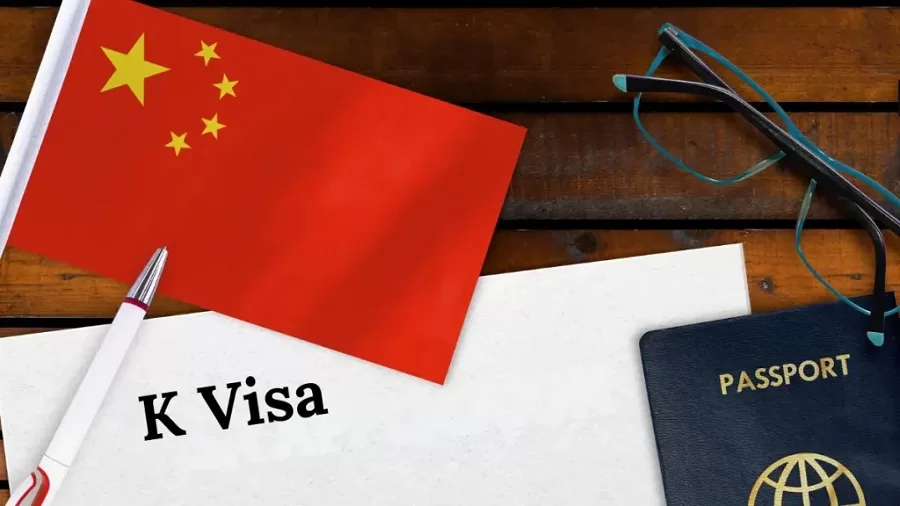
The CPC Central Committee and the State Council emphasize that science and technology are the primary productive forces and that talent is the primary resource. China needs to implement more open and effective talent policies. To carry out the national strategy of strengthening the country through talent in the new era, the Chinese government decided to attract more young overseas science and technology professionals to China. According to the Ministry of Foreign Affairs, the introduction of the “K Visa” is aimed at promoting exchanges and cooperation among young scientific and technological talents from China and abroad . The State Council’s official decision further clarifies that the new K Visa is intended to “facilitate foreign young science and technology talents’ entry into China, and promote international cooperation and exchanges of young scientific and technological talents” .
Main Features of the K Visa
-
Eligible Applicants: The K Visa is specifically issued to “foreign young scientific and technological talents entering China” . Qualified applicants include individuals who graduated from well-known universities or research institutions at home or abroad in STEM fields (Science, Technology, Engineering, Mathematics) with a bachelor’s degree or above, or those who are engaged in education and research in related fields at such institutions.
-
Application Requirements: According to the State Council’s decision, applicants must “meet the conditions and requirements for foreign young scientific and technological talents stipulated by the competent authorities of the Chinese government and submit relevant supporting documents” . This generally includes degree certificates, proof of study or employment, etc. Unlike traditional Work (Z) or Business (M) visas, the K Visa does not require an employment contract with a Chinese entity or an invitation letter.
-
Application Procedure: Eligible applicants may apply at Chinese embassies and consulates abroad. The Ministry of Foreign Affairs and the National Immigration Administration will upgrade the visa system, streamline procedures, and publish detailed guidelines through embassies and consulates . After reviewing documents, consulates issue visas with validity and duration determined based on the applicant’s situation. Upon entry, if applicants need an extension or replacement, they can apply at local exit-entry administrations in China.
-
Validity and Duration of Stay: The government has not yet released exact details on validity and duration, but officials have indicated that K Visa holders will enjoy more convenience regarding multiple entries, longer validity, and extended stays . Reports suggest that holders may stay for several months or longer and engage in activities such as education, scientific and technological exchanges, entrepreneurship, and business cooperation.
Differences from Other Visa Categories
The K Visa differs significantly from existing Chinese visas:
-
Z Visa (Work Visa): For foreigners employed in China ; requires a work permit and employer sponsorship.
-
M Visa (Business Visa): For commercial and trade activities ; requires an invitation letter from a Chinese partner .
-
Q1/Q2 Visa (Family Reunion): For relatives visiting or reuniting with family in China .
-
S1/S2 Visa (Private Affairs/Relatives): For relatives of foreigners residing in China .
By contrast, the K Visa does not require any employment sponsorship or family ties . It also offers greater flexibility in multiple entries, visa validity, and permitted activities . Importantly, it is different from the R Visa (for high-level foreign experts), which typically requires an invitation letter from a Chinese institution . The K Visa only requires that applicants meet the age and educational background criteria .
Implementation Timeline and Scope
The State Council’s decision took effect on October 1, 2025 . The K Visa is a national policy, meaning it applies across all of China. All exit-entry administrations within China and Chinese embassies/consulates abroad are authorized to process K Visa applications. The Ministry of Foreign Affairs has announced that embassies will gradually publish detailed guidelines on application procedures and required documents .
Supporting Measures and Facilitation Policies
To ensure smooth implementation, the Ministry of Foreign Affairs and other departments will introduce supporting measures, upgrade visa systems, and optimize processing . Embassies will publish detailed requirements and assist applicants with extensions, renewals, and replacements . The initiative is also part of China’s broader talent attraction and opening-up strategy, reflecting its proactive approach to competing for global scientific and technological talent .
References
-
State Council Order No. 814: Decision on Amending the Regulations on the Administration of the Entry and Exit of Foreigners
-
Ministry of Foreign Affairs and National Immigration Administration statements
-
Science and Technology Daily, CCTV reports
-
Beijing Foreign Affairs Office official notice